

Can you imagine your vehicle unfortunately fails on the nighttime highway? Well, local tows can run $100–$150 while long hauls climb to $2.50–$5 a mile, meaning a 400-mile trip might cost $1,200 or more. Rules also change by state: California bans rope towing on highways, Texas demands safety chains, and Florida requires flags on chains. And every method has its trade-offs, with flatbeds being safest, dollies being cheapest, and DIY ropes being the riskiest. In the end, whether you’re moving a car across town or planning a 385-mile trip like the Sacramento to Los Angeles case we shared, professional towing or even shipping with Nova Auto Transport gives you the best mix of safety, cost control, and peace of mind.
Towing is one of those things drivers don’t think about until they really need it. But when that moment comes, not knowing the safe and legal way can lead to big mistakes. Improper towing can damage your transmission, put you at risk of accidents, and even get you a ticket if you break local laws.
That’s why knowing how to tow a car, whether it’s across town, across the state, or just off the road, is important in 2025. This guide goes deep: we’ll cover all towing methods, the costs, the laws, the safety requirements, DIY vs professional towing, and even city-to-city tips for California.
Related read: Not sure if towing is the right option? Compare it with shipping in our blog How Much Does It Cost to Ship a Car to California?
Towing Methods at a Glance
| Towing Method | Best For | Avg. Cost | Distance Suitability | Pros | Cons |
| Flatbed Tow Truck | All vehicles, long-distance | $100–$250 (local) | Short & Long | Safest, no wear on car | More expensive |
| Tow Dolly | Front-wheel drive cars | $50–$150/day rental | Short & Medium | Affordable rental | Not good for RWD/AWD |
| Tow Bar (Behind RV) | RV travelers | $200–$500 setup | Long | Convenient for RV users | Needs wiring, legal limits |
| Chain/Rope (DIY) | Emergencies only | Free | Very short (1–5 miles) | Quick in emergencies | Unsafe, often illegal |
| Wheel-Lift Tow | Sedans, short distances | $75–$125 | Short/Medium | Cheaper than flatbed | Not ideal for AWD/luxury |
Request Professional Towing Assistance
Towing Methods (Deep Dive)
The way you move a car that is not self-driving depends on the choice that you make. However, every towing method has its advantages, disadvantages, and specific situations in which it is best applied. The five most prevalent approaches in 2025 are listed below and explained in detail so you have a clear understanding of the one that suits your particular scenario.
Flatbed Towing – The Industry Gold Standard
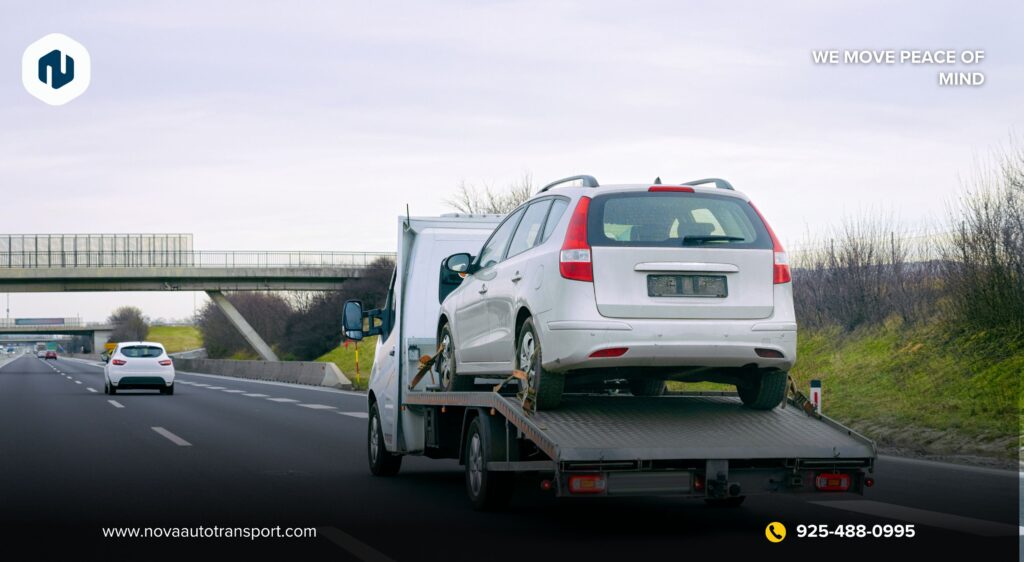
The most professional and safest vehicle moving method is flatbed towing. Under this arrangement, the tow truck is equipped with a hydraulic system that can be used to bring the bed down to enable your vehicle to be winched onto the platform or driven. When the vehicle is completely secured, then the whole car will be lifted off the ground to be transported.
Why it matters: With all four wheels lifted, there is zero wear on the tires, no stress on the drivetrain, and no risk of damaging sensitive parts like the transmission or suspension. This makes it the go-to method recommended by most manufacturers.
Best for:
- All-Wheel Drive and Four-Wheel Drive vehicles that can’t have their wheels spinning freely.
- High-end luxury vehicles like BMWs, Teslas, and Lexus sedans where even minor damage can cost thousands.
- Accident-damaged vehicles that may not roll properly or have compromised axles.
Pros:
- Safest and most secure way to move a car.
- Ideal for long-distance towing since the car never touches the road.
- Reduces the risk of scratches or debris damage.
Cons:
- Generally more expensive than other methods, with local tows starting at $100–$150.
- Flatbed trucks may not always be available in rural or remote areas.
Tow Dolly – Affordable but Limited
A tow dolly is a small two-wheeled trailer that lifts the front wheels of the car off the ground while the rear wheels remain in contact with the road. The dolly is attached to the towing vehicle via a standard hitch.
Why it is important: Tow dollies are affordable and can be rented easily by such companies as U-Haul. They are very popular among short distance drivers or economists.
Best for:
- Front-wheel drive (FWD) This type of vehicle has raised drive wheels (front).
- Travels of less than 500 miles where cost plays a greater role than comfort.
Pros:
- Affordable – the average price of rentals is between 50-150 per day.
- Simple to fit and be pulled by the majority of trucks or SUVs.
- Smaller and more portable than a trailer.
Cons:
- Not suitable for Rear-Wheel Drive (RWD) or All-Wheel Drive (AWD) cars, as it can severely damage the transmission.
- Backing up with a dolly is very difficult, often requiring disconnecting.
- Offers less stability than a full flatbed setup.
Tow Bar (Behind an RV) – For Long-Term Travelers
Tow bars have particularly been a significant commodity with the RV crowd and snowbirds who enjoy months of travel. A tow bar is used to connect the car right behind the RV so that it trails behind the RV. The towed car has four wheels that do not come up as was the case with a dolly.
Setup requirements:
- A base plate must be permanently installed on the towed car.
- A wiring kit for brake lights and turn signals must be connected for road legality.
- Safety chains are required as a backup connection.
Why it matters: Tow bars make sense if you plan on towing regularly. Once installed, it’s much faster to hook up compared to loading onto a dolly or flatbed.
Pros:
- Extremely convenient for RV owners who want a smaller car for day trips.
- Once set up, attaching and detaching takes only minutes.
- Legal and road-compliant when equipped with the proper lighting system.
Cons:
- High initial cost: $200–$500 for setup plus installation labor.
- Some states impose legal distance rules or braking requirements for heavy cars.
- Continuous wear on the towed car’s tires and drivetrain since all wheels remain on the ground.
Chain or Rope Towing – The Emergency Only Option
This is the most old-fashioned and risky method of all: connecting two vehicles with a chain, tow strap, or rope. It’s usually attempted by drivers who break down within a short distance of home or a repair shop.
Why it matters: While it can get you out of a parking lot or off a busy road quickly, it’s not safe for regular use and is often illegal on public highways. In California, for example, rope towing is strictly prohibited outside of emergency situations or private property.
Pros:
- Free if you already own a heavy-duty rope or chain.
- Fast in true emergencies where waiting for a tow truck isn’t possible.
- Doesn’t require specialized equipment or rental costs.
Cons:
- Extremely unsafe – no braking control for the towed vehicle.
- Steering becomes difficult, especially at higher speeds.
- Illegal on many roads, leading to tickets or fines.
- Only suitable for moving a car one to five miles at most.
Wheel-Lift Towing – The Middle Ground
Wheel-lift towing is one of the most common roadside assistance methods. In this technique, a hydraulic yoke lifts either the front or rear wheels of the car while the other two remain on the ground.
Why it matters: Wheel-lift systems are faster to deploy than flatbeds and cheaper, making them a favorite for local towing companies and AAA-style services.
Best for:
- Sedans, compact cars, and light-duty vehicles.
- Local towing across short to medium distances.
Pros:
- Less expensive than flatbed towing.
- Faster hook-up and drop-off times.
- Widely available through most tow operators.
Cons:
- Not ideal for AWD or luxury cars due to potential drivetrain strain.
- Some wear on tires and suspension since two wheels roll on the ground.
- Less secure than a flatbed for long trips.
Legal & Safety Requirements
Towing isn’t just about hooking a car and driving off, there’s a whole layer of laws and safety rules you got to follow. Every state has their own set of codes and restrictions, and if you ignore them, you can end up with tickets, fines, or even having the car impounded. People sometimes don’t realize how strict states can be with towing regulations because they assume as long as the car moves it’s fine, but the reality is the law looks at towing as a high–risk activity. That’s why paying attention to state laws, insurance coverages, and licensing rules for tow trucks is just as important as the towing itself.
State Towing Laws
In California, rope towing and chain towing is not allowed on highways unless it’s a dire emergency, like you need to get a broken vehicle off the freeway shoulder before it causes an accident. The state does this because ropes and chains don’t give enough control over the towed car, especially at higher speeds. If you’re using a tow bar or a dolly, the law says your car must have working brake lights and safety chains in place so other drivers on the road know what’s happening behind you. People sometimes try to “get away” with skipping the lights or chains, but CHP can pull you over fast for that.
Texas takes a different approach but still focuses heavy on safety. If you’re towing with a tow bar or dolly there, safety chains are mandatory by law. These chains act like a backup connection in case the main hitch comes loose, so the car doesn’t go rolling into traffic. Some drivers think it’s just “extra equipment,” but it’s actually a legal requirement and getting caught without chains can mean fines.
Florida adds its own twist: when using a tow bar, the distance between the towing vehicle and the car can’t be more than 15 feet. And if you’re using a chain, the state requires a white flag to be attached to the chain itself so it’s visible to other drivers. It sounds like a small detail, but it’s one of those safety quirks that Florida enforces, and police really do check for it during traffic stops.
The bigger point here is that state rules vary widely. Something that’s okay in Texas could get you ticketed in California, and what’s fine in Florida might not fly in Nevada. That’s why, before towing, you should double-check local DMV or DOT rules, especially if you plan to cross state lines.
Insurance Considerations
Insurance is another thing people often misunderstand when it comes to towing. Most regular auto insurance policies do not cover damage that happens during a DIY tow. If you’re pulling your buddy’s car with a rope and something goes wrong, like the bumper gets ripped off or the transmission burns out, your insurer is probably not paying a dime for that.
On the other hand, if you have roadside assistance coverage through companies like AAA, GEICO, or State Farm, you’re usually good for professional towing within a certain number of miles (sometimes 5, 10, or even 100 miles depending on your plan). The key here is that the tow has to be done by an approved professional, not just anyone with a truck and a rope. A lot of people don’t realize this until after something goes wrong, so always read the fine print on your policy.
If you’re considering regular towing, like RV towing setups or long–distance hauling, it’s smart to call your insurance company ahead of time and ask how they handle accidents or damage during the tow. Some policies require you to add on a towing endorsement or equipment coverage.
Licensing for Tow Trucks
Finally, professional towing companies can’t just throw a hook on a truck and start working. They need to be properly licensed and insured to legally operate. This is important because if something goes wrong and they damage your car, their liability insurance is what covers your loss. Without that, you could be stuck fighting in small claims court.
Tow trucks also need to meet capacity rules. Under the Federal Motor Carrier Safety Administration (FMCSA), vehicles used for towing have to comply with weight ratings and towing capacity. That means the truck has to be able to safely handle the gross weight of your car plus any trailer or dolly. Smaller trucks pulling SUVs or loaded vans without proper rating is a big safety hazard and technically illegal.
For you as a car owner, this means one thing: if you’re paying someone to tow your car, always check that they’re licensed and insured. Most reputable companies, including Nova Auto Transport partners, have this locked in because it protects both sides. But some small “under the table” tow guys might not, and you don’t want to hand your car to someone who can’t cover damages if they wreck it.
Tools & Equipment Checklist
- Tow Straps vs Chains: Straps are safer; chains are riskier but stronger.
- Tow Hitch Classes: Class I (small cars) to Class V (large trucks).
- Safety Chains: Required in most states.
- Auxiliary Braking System: Required in many states if towed car > 3,000 lbs.
- Lighting Hookup Kits: RV towing requires brake/turn signal wiring.
See our How It Works page for details on insurance and coverage during transport.
DIY vs Professional Towing
When your car breaks down or needs to be moved, the big question comes up: should you try to tow it yourself, or just call in the pros? Both choices come with their own sets of advantages and risks, and the right one really depends on the situation, your budget, and honestly your nerves. Let’s break it down.
DIY Towing
DIY towing is usually the first thing people think about, especially if they’ve got a buddy with a truck and a rope or maybe access to a tow dolly. On the surface it feels cheap and quick, you don’t need to wait for a tow truck, and you can get moving right away. It also gives you flexibility since you’re not depending on someone else’s schedule.
But here’s the reality: towing yourself comes with real dangers. If you don’t have the right equipment, or if you set it up even a little bit wrong, you can easily make things worse. Transmission damage is common when towing an automatic the wrong way, and suspensions can bend if the car isn’t loaded correctly. Tires can shred, steering locks can jam, and in the worst case, you could lose control of the towed vehicle on the road.
Another thing most people forget is that DIY towing isn’t always legal. Many states have rules against rope towing on highways, and there are weight and braking laws that apply even if you’re just hauling across town. So while it can save money upfront, the “hidden costs”, from bent axles to possible tickets, can end up costing way more than hiring a professional in the first place.
Professional Towing
Professional towing, on the other hand, is what most drivers rely on. Yes, it costs more, usually between $2 and $5 per mile depending on the distance, the size of your car, and where you are. But that price comes with important benefits: licensed operators, insurance coverage, and trucks that are built to handle the job safely.
The biggest advantage is peace of mind. A professional tow operator knows how to handle AWD cars, luxury vehicles, and even badly damaged ones without causing more harm. They’ve got flatbeds, wheel-lifts, and all the right gear that a regular driver doesn’t. In accident situations or for long-distance towing, this is really the only smart choice.
Another plus is insurance. If something happens during the tow, the company’s liability insurance steps in. That means your car is protected, unlike a DIY tow where you’re on the hook for any mistake.
At Nova Auto Transport, we partner with professional carriers nationwide, offering flatbed towing that keeps your vehicle safe no matter the distance. For drivers planning moves or relocations, it’s often smarter and safer to ship or tow with a professional instead of taking on the risks yourself.
Towing Costs (2025 Breakdown)
One of the biggest questions drivers ask when their car breaks down or they need to move it across a city or even between states is: how much will it cost me to tow this car? The truth is that towing prices can vary a lot depending on the method, distance, and even the time of day. A local tow across town might only cost $100, but a longer tow across hundreds of miles can easily move into the thousands. Below is a breakdown of common towing services in 2025.
| Service | Local Tow (10 miles) | Long-Distance Tow |
| Flatbed Tow Truck | $100–$150 | $2.50–$5 per mile |
| Wheel-Lift Tow | $75–$125 | $2–$3 per mile |
| Tow Dolly Rental | N/A | N/A |
| Tow Bar Setup | One-time $200–$500 | Long trips |
Flatbed towing is usually the most expensive upfront, but it’s also the safest and most recommended option for AWD, luxury, or damaged cars. Local flatbed service can start at $100 to $150, while a long-distance tow will often run between $2.50 and $5 per mile. That means a 100-mile tow could cost $250 to $500, and a 400-mile tow could reach $1,200 or more. Wheel-lift towing is cheaper, but it’s not suitable for all vehicles and comes with more wear.
Tow dollies and tow bars are more of a DIY rental option. A dolly costs about $50–$150 per day to rent, but remember you also need a truck or SUV strong enough to pull it. A tow bar setup is a one-time investment of $200 to $500 plus installation, commonly used by RV owners who tow their small car behind them for long trips.
Factors That Affect Towing Cost
- Distance: The further the car needs to go, the more expensive it gets. Local tows under 10 miles often have flat fees, but long-distance tows are usually priced per mile.
- Vehicle Size: Larger SUVs, vans, or trucks cost more to tow because they’re heavier and require more powerful equipment.
- Location: Towing in a busy city like Los Angeles or San Francisco can be pricier than in rural areas, simply because of traffic delays, higher operating costs, and congestion.
- Time of Day: After-hours, weekends, and holidays often come with surcharges. A midnight emergency tow might cost double a weekday afternoon tow.
- Emergency vs Scheduled: If you call a tow truck last minute after a breakdown, you’ll pay more. Scheduling a tow in advance, especially for moving a car across states, gives you better pricing.
Tip: Sometimes, if you’re planning a long-distance move, it’s actually cheaper and safer to ship your car with Nova Auto Transport rather than pay thousands for towing.
Step-by-Step Guide: How to Tow Safely
Towing isn’t just hooking up and going, it involves steps that keep you, your vehicle, and others on the road safe. Here’s a detailed breakdown of what you should do before and during towing:
- Check the towing capacity of the tow vehicle. Every truck or SUV has a maximum towing weight. If your car plus the trailer or dolly is heavier than the rating, you risk blowing your transmission, losing control, or even breaking the hitch. Always confirm your vehicle can handle the weight.
- Attach the hitch or dolly securely. A tow dolly or bar must be properly locked into the receiver hitch. Safety pins and clips should be double-checked. Loose hitches are a leading cause of towing accidents.
- Load the car correctly. For front-wheel-drive cars, the front wheels go on the dolly so the drive wheels are off the ground. For AWD, only a flatbed is safe because having any wheels on the road can wreck the drivetrain.
- Attach safety chains. These chains act as a backup if the hitch disconnects. In most states, safety chains are legally required. Cross them under the hitch to form a cradle that will catch the tongue of the trailer if it falls.
- Connect the lighting system. When towing with a dolly or bar, your car’s brake lights and turn signals must work in sync with the tow vehicle. This usually requires a wiring kit. Without it, other drivers won’t know when you’re stopping or turning, and that’s dangerous and illegal.
- Check tire pressure and steering lock. Tires should be inflated to proper levels, and the steering wheel should be locked straight to avoid swerving.
- Drive slowly. The maximum safe towing speed is usually 55 mph. Going faster increases the risk of sway, jackknifing, or braking failure.
- Avoid highways if using rope or straps. Rope towing should only be for emergencies on short, local roads. On highways, it’s illegal in most states and very dangerous.
- Stop every 50–100 miles to check. On long tows, pull over and check that the hitch, chains, and lights are still secure. Road vibrations can loosen things over time.
Pro tip: Professional carriers like Nova Auto Transport handle all of these steps for you, using flatbeds and insured equipment. If you’re not confident doing it yourself, it’s always safer to leave it to the pros.
City-to-City & Scenario Guides
Towing in California isn’t the same everywhere, traffic, terrain, and laws all change how easy or difficult the process can be.
Towing in Los Angeles:
The sheer amount of traffic in LA makes towing stressful. Cars weave in and out, and stopping distances are unpredictable. Flatbed towing is usually the safest choice here, because dollies and ropes don’t handle well in stop-and-go traffic. LAPD is also strict on illegal rope towing, so don’t risk fines.
Towing in San Francisco:
San Francisco’s steep hills create an added challenge. Trying to tow with a dolly or bar can cause major issues when starting or stopping on an incline. Cars can slip, brakes can overheat, and accidents happen fast. Flatbeds are basically the only safe option in SF. Parking restrictions also make it harder to hook up in crowded areas.
Towing in Rural California:
If you’re driving through places like the Central Valley or northern California highways, the issue isn’t traffic but distance. Services may be spread out, so you could go 50 miles or more before finding a tow truck. Planning fuel stops, checking weather, and carrying emergency gear is critical here. Long stretches of highway also mean higher towing bills, so in rural California, shipping your car with Nova Auto Transport can be a smarter move for cross-state relocations.
Remember: For cross-state moves, sometimes car shipping is not only cheaper but safer than towing. Check our [Car Shipping California Guide] to see why.
How to Save Money on Towing
Towing can add up fast, but there are ways to cut costs if you plan ahead:
- Compare quotes: Don’t call just the first tow company you find. Get at least two or three quotes if time allows, especially for long-distance jobs.
- Use roadside memberships: AAA memberships often include free local tows up to 5–7 miles and discounted rates beyond that. Many credit cards also offer towing assistance perks that drivers forget about.
- Rent smart: If your trip is short, renting a dolly or bar might be cheaper than hiring a tow truck. Just make sure your tow vehicle can handle it.
- Avoid emergencies when possible: After-hours calls (like a 2 AM tow) come with surcharges. If your car breaks down but it’s safe, waiting until business hours may save you $100 or more.
- Check insurance add-ons: Some insurance policies include towing coverage for a small monthly fee. If you already have it, use it, don’t pay out of pocket unnecessarily.
Case Study: Real Example
To give you a real look at costs and decisions, here’s a case study from a Nova Auto Transport customer.
A BMW owner in Sacramento had their car break down and needed it moved to Los Angeles, about 385 miles. At first, they thought about renting a dolly to save money, but because the car was a rear-wheel-drive luxury vehicle, a dolly would have put the transmission at serious risk. They decided on a flatbed tow instead.
- Method: Flatbed towing
- Cost: $900 total for the 385-mile trip
- Reason: The BMW was a luxury RWD, meaning safety was more important than saving a few hundred dollars.
- Result: The car was delivered the same day, safe and damage-free. The customer later admitted it was worth paying more rather than gambling with a DIY setup.
With Nova Auto Transport, stories like this happen every day. Professional towing may look expensive upfront, but it prevents the hidden costs and headaches that come with risky methods.
FAQs
Can you tow a car without keys?
Yes, you can tow a car without keys, but it requires special methods. Flatbed towing is the safest option, since the car doesn’t need to be unlocked or put in neutral. For dollies and wheel-lift tows, it’s much harder because the steering must be locked straight, and the transmission might be at risk.
Is towing with a rope legal?
In most states, towing with a rope or chain is illegal except in short-distance emergencies. California completely bans rope towing on highways. If you do use a rope, keep speeds low, attach a white flag if required (like in Florida), and stay under 5 miles.
How far can you tow a car with a dolly?
A tow dolly is safe for a few hundred miles if used properly with a front-wheel-drive vehicle. But it should not be used with AWD or RWD cars, as the drivetrain could overheat and fail.
Is it cheaper to tow or ship a car long-distance?
For trips over 500 miles, shipping is often just as affordable as towing, and much safer. Towing at $3 per mile quickly adds up, while shipping with Nova Auto Transport gives you a flat locked-in price and less risk.
Can towing damage an automatic transmission?
Yes. If you tow an automatic car with its drive wheels on the ground, it can burn out the transmission in minutes. That’s why AWD cars and luxury automatics should always go on flatbeds.
What equipment do I need to tow safely?
At minimum: a Class-rated hitch, safety chains, tow straps, and a lighting hookup kit. For long-distance, you may also need an auxiliary braking system for the towed car.
How much does it cost to tow a car 100 miles?
Expect around $250–$400 depending on the car size, location, and time of day. Flatbeds lean toward the higher end of that range.
Would You Like to Get Your Car Transported?
Towing a car isn’t a one-size-fits-all job. You’ve got options, from flatbeds and wheel-lifts to dollies and even old-school ropes, but each comes with pros, cons, costs, and risks. The safest method will always be a flatbed tow or using a licensed, insured professional. DIY can save money short term, but one mistake can cause thousands in damage.
If you’re planning a long-distance move, remember that shipping is often cheaper and much easier than towing. With Nova Auto Transport, you can get a locked-in price, avoid surprise fees, and know your car is handled by professionals who treat it like their own.
Get a Free Instant Quote from Nova Auto Transport today and let us take the stress out of moving your vehicle.


