

Choosing between open and enclosed car transport can change how much you pay and how protected your car stays during shipping. Open transport is the most common and affordable way, perfect for everyday cars or short moves. Enclosed transport, on the other hand, offers full protection for luxury, classic, or exotic vehicles, though it costs about 40–60% more. Prices vary by distance, season, and route, with winter and early spring usually being the cheapest times to ship.
Both methods are safe when handled by licensed, insured carriers. Nova Auto Transport gives customers both options with transparent pricing, real insurance coverage, and no hidden fees. With $1 million protection for enclosed shipments and 24/7 tracking, Nova makes car shipping simple, safe, and stress-free. Whether you’re moving across the state or the country, they help you choose the best way to ship your car confidently.
Introduction
Why do some individuals spend nearly twice as much to transport their automobiles? It is not as much about money, it is about the way their cars move. The thing is, that car transportation is not a one-size-fits-all. There are people transporting an ordinary car that they drive daily and some are transporting a six-figure luxury car. They both have different needs and that is where the option of the open and enclosed car transport comes in.
Choosing the appropriate mode of transportation will save you hundreds of dollars and pain. It does not only influence price, but also timing, safety, as well as how your car will appear upon arrival. This is more important than ever in 2025 when the price of fuel keeps fluctuating and seasonal demand is continually on the rise.
All the information is presented in this guide where you will learn everything you need to know, the cost breakdown, pros and cons, and how to determine which of them suits your situation best. You will also find the actual average costs, trends, and professional opinions of Nova Auto Transport which is one of the highly rated auto shipping companies in the United States.
Nova has helped thousands of people ship their cars nationwide, from students and families to luxury car collectors. Their transparent pricing and insured carriers make comparing options simple and safe.
So before you book your next car shipment, take a few minutes to understand what really makes the difference between open and enclosed transport, and how to choose smartly.
What Is Open Car Transport?
Open car transport is the most common way to ship vehicles in America. You’ve probably seen those big trucks on the highway carrying several cars stacked in two levels, that’s open transport.
In simple terms, open carriers are trailers that move 7–10 vehicles at once. The cars are safely strapped and exposed to the open air during the journey. It’s the same method used by dealerships to move brand-new cars from factories to showrooms, which shows how trusted and reliable this system really is.
For most people, open transport is the best choice. It’s affordable, fast, and widely available. Because so many carriers operate this way, finding one that fits your schedule is easy.
When to Use Open Car Transport
- Transportation of a normal car between states (such as Los Angeles to Dallas or Miami to Chicago).
- Students in colleges who are sending cars to campus.
- People relocating for work
- Buyers of cars online who will have them shipped by dealership or auction houses.
Pros of Open Transport
- Lower Cost: Costs are shared among customers because carriers are able to carry several cars at a time hence it is cheaper.
- Increased Pickup Availability: You will not have to wait a long time to be scheduled since every open carrier is everywhere.
- Effective Delivery: Drivers are usually free to drop off anywhere and in any direction.
Cons of Open Transport
- Exposure to Weather and Road Debris: Your car travels uncovered, so it might get dust, dirt, or rain on it, nothing major, but worth knowing.
- Slightly Higher Cosmetic Risk: Though damage is very rare, small scratches or paint chips can happen due to exposure to wind or debris.
Open transport is perfect for 90% of customers. If you’re shipping your daily ride or a used car, this is usually the smartest way to go.
What Is Enclosed Car Transport?
Enclosed car transport is a premium shipping service designed for vehicles that need maximum protection. Instead of being exposed to the elements, your car is loaded inside a fully covered trailer, think of it like a moving garage on wheels.
These enclosed trailers can carry between 1 to 3 vehicles and often include climate control, hydraulic lifts, and soft straps for delicate vehicles. It’s the same method used to move luxury, exotic, antique, or collector cars to shows or dealerships.
Enclosed carriers also come with higher insurance limits and specially trained drivers who understand how to handle rare or high-value cars.
When to Use Enclosed Car Transport
- Shipping a luxury, exotic, or sports car (Ferrari, Lamborghini, Bentley, Tesla, etc.)
- Transporting a classic or restored vintage vehicle
- Moving cars for auto shows or private collections
- Shipping custom-painted or modified vehicles
Pros of Enclosed Transport
- Maximum Protection: Your car is completely shielded from dust, rain, snow, and road debris.
- Higher Insurance Coverage: Enclosed carriers usually include coverage up to $1 million, giving total peace of mind.
- Privacy and Security: Ideal for rare or high-value vehicles that owners don’t want visible on the road.
Cons of Enclosed Transport
- 40–60% More Expensive: The premium protection and limited capacity increase costs.
- Limited Availability: Fewer enclosed carriers exist nationwide, so pickup times might take longer.
- Longer Wait Times in Peak Season: Especially during summer or major car events when enclosed demand rises.
So, if your car is expensive, sentimental, or part of a collection, enclosed transport is the safer, smarter choice. But if you’re simply moving your car to another city and don’t mind a little dust, open carriers are totally fine.
Cost Comparison: Open vs Enclosed Auto Transport
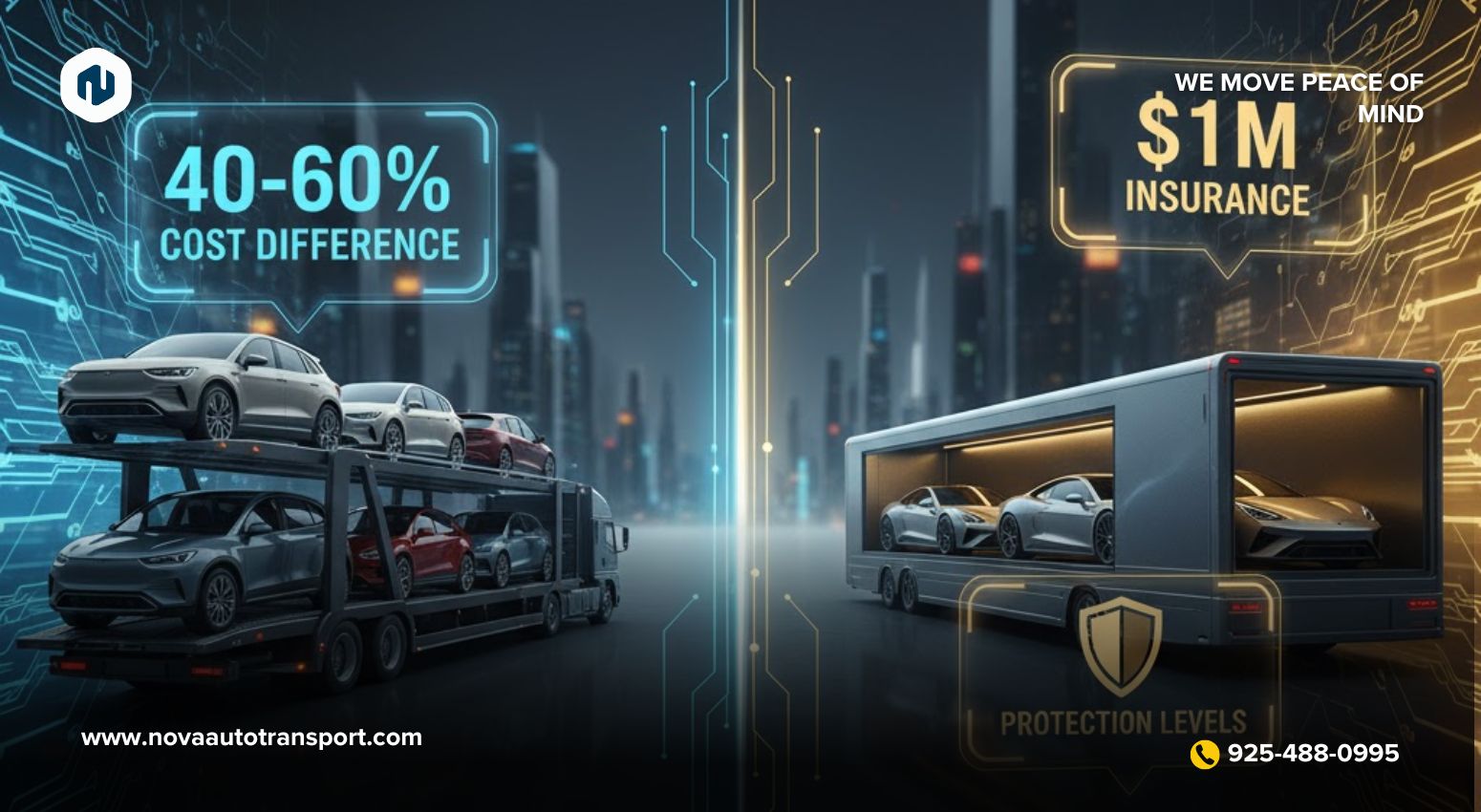
Now let’s talk about what everyone wants to know, how much does it cost?
Here’s a breakdown of average 2025 prices for both transport types, based on national routes and Nova Auto Transport’s real carrier data:
| Distance | Open Carrier (avg.) | Enclosed Carrier (avg.) |
| Under 500 miles | $600–$800 | $900–$1,200 |
| 500–1,500 miles | $900–$1,200 | $1,400–$1,800 |
| 1,500–2,500 miles | $1,200–$1,600 | $1,700–$2,300 |
| Cross-country (2,500+ miles) | $1,500–$1,900 | $2,200–$2,900 |
As you can see, enclosed transport typically costs 40–60% more than open. The price gap isn’t random, here’s why enclosed carriers cost extra:
- Less Cars Per Load: The enclosed trailers can only carry 1-3 vehicles whereas the open trailers can carry up to 10. It comes to mean that the fixed cost is shared with fewer customers.
- More Insurance and Equipment: These carriers have high insurance cover and have specialized equipment as hydraulic lifts, soft straps and climate control.
- Proficient Drivers: Enclosed drivers deal with cars that are rare or costly and will likely be trained in a specialized fashion, which implies increased care but increased pay.
- Exclusive Door-to-Door Service: Since they are high-value cars, the drivers have fewer stops and follow customized routes.
Therefore, when you are comparing quotes and notice one that is almost twice as much, then you need not panic, it is not overcharging but it is a different type of service. Consider economy vs. first-class flights: they arrive at the destination but the journey and the safety are quite different.
Nova Auto Transport never leaves out a choice of quote to the customers. You will find both open and enclosed prices, as well as complete details of insurance. No hidden costs, no “unforeseen changes in the future.
Factors That Influence Cost
Even though the transport type is the biggest difference, there are many other things that affect how much you’ll pay for car shipping. Here’s what actually shapes the final quote:
1. Distance and Route Popularity
An overall longer trip is more expensive whereas a shorter trip can be more expensive per mile. This is because pick up, coordination as well as labor are similar irrespective of distance. The most popular flights such as California- Texas or Florida- New York tend to be cheaper since they are constantly flown by carriers. The less traveled routes (such as Idaho to Maine) are more expensive because of the reduced number of carriers.
2. Vehicle Type and Size
The bigger cars such as SUVs, pick-up trucks or vans occupy more area and put additional weight to the trailer. You will spend an additional amount of 150-300 more than a small sedan. Low-profile sports cars might also need special loading ramps particularly in closed trailers.
3. Vehicle Condition
In case your car is not running, this requires additional labor and machinery to load. The operation of winches and special equipment on vehicles that cannot be operated is utilized by the carriers and increases the overall price by approximately 150 to 200 dollars.
4. Seasonal Demand
The costs of car shipping are also seasonal just as in the case of plane tickets or hotel rooms. Summer and holidays are seasons of peak (moves, vacation, snowbirds). The most desirable prices are in fall and early winter.
5. Pickup Flexibility
If you can be flexible with your pickup and delivery window (for example, allowing a 2–4 day range), carriers can fit your car into existing routes. That saves money. Specific date or express delivery requests always cost more.
6. Type of Carrier
Enclosed carriers have limited capacity and specialized equipment, so they cost more. But they also include premium insurance, up to $1 million with Nova Auto Transport, which offsets some of the price difference if you’re shipping something valuable.
These are the same variables Nova’s real-time quote calculator considers. When you enter your route, car type, and preferred service, it shows transparent rates pulled directly from active carriers. That’s how you know you’re not being overcharged or lowballed just to “book fast.”
Protection & Safety: How They Differ
Safety is one of the biggest reasons people spend more for enclosed shipping. Both open and enclosed transport are safe when done by professional carriers, but the level of protection is not the same.
In open transport, your car is tightly secured with wheel straps or chains on a two-level trailer. It’s safe from movement or rolling, but it’s still open to the weather. That means your car could get rain, dust, or small road dirt on it. Nothing serious, just like driving it on a long highway trip.
With enclosed transport, the story is different. The car sits inside a trailer with walls, roof, and sometimes climate control. It’s completely hidden from weather, sunlight, snow, or rocks from the road. Many enclosed carriers use soft straps instead of metal chains to avoid scratches.
The difference also shows in insurance coverage. Open carriers usually offer up to $250,000–$500,000, while enclosed ones often go up to $1,000,000. Nova Auto Transport gives this full protection for every enclosed shipment, and that’s a huge peace of mind for owners of classic, exotic, or high-end cars.
So yes, both methods are safe. But if you love your car like it’s your baby, enclosed is the way to go.
Which Option Is Best for You?
Choosing between open and enclosed transport depends on your car, your budget, and how much protection you want. Here’s a simple way to decide.
| Vehicle Type | Recommended Option | Reason |
| Everyday Car | Open | Affordable and quick |
| SUV or Truck | Open | Common size, easy fit |
| Classic Car | Enclosed | Protects paint and body |
| Exotic Car | Enclosed | Privacy and premium care |
| Show Car | Enclosed | Spotless and exhibition-ready |
Let’s break that down a bit more.
For shipping a vehicle for daily use, you should choose open transport. Open transport is less expensive, faster to transport, and functions under most weather situations. Unless you’re planning to pay for transport twice, dealing with a little dirt or rain is definitely worth it.
When transporting a classic or exotic vehicle then enclosed transport is worth the cost. Classic and exotic vehicles will typically have unique paint jobs, rare or hard-to-find parts, and high market values. A small dent or scratch can cost hundreds of dollars in repairs.
For example, if someone was shipping a classic 1969 Camaro, or even a 2020 Ferrari 488, they would certainly choose enclosed transport. With enclosed transport, the vehicle would arrive in clean, pristine condition with no scratches or dents.
When getting a quote for transport for a daily driver or classic vehicle, Nova Auto Transport has the option to provide both open and enclosed transport options side by side for price comparison.
Open vs Enclosed: Seasonal Cost Trends
Car shipping prices don’t stay the same all year. Like airline tickets, they go up and down based on demand and weather. Here’s what 2025 trends show so far:
| Season | Cost Trend | Notes |
| Winter | Lower | Less demand, slower routes |
| Spring | Moderate | Balanced pricing |
| Summer | Higher | Peak moving season |
| Fall | Moderate | Prices begin to dip again |
In winter, fewer people ship cars because of snow and cold weather, so prices drop. But some northern routes take longer due to icy roads.
In spring, demand picks up, students, relocations, and auto sales. Prices are fair, and weather is easier for transport.
In summer, prices are highest. Everyone moves at once, families, military relocations, car buyers, snowbirds returning north. Carriers get booked quickly, and fuel prices usually rise too.
By fall, things calm down again, and prices balance out.
Nova Auto Transport tracks these market changes daily. Their online quote system adjusts automatically to real-time demand so you never overpay.
So, if you can plan ahead, try booking in February, March, or late fall, those months often have the best rates.
Pros & Cons Summary
Here’s a quick view to help compare both methods at a glance.
| Feature | Open Transport | Enclosed Transport |
| Cost | $$ (Affordable) | $$$$ (Premium) |
| Protection | Moderate | Maximum |
| Insurance | Standard (Up to $500k) | Premium (Up to $1M) |
| Visibility | Exposed | Hidden |
| Ideal For | Everyday cars | Luxury, classic, exotic |
| Availability | High | Limited |
| Speed | Faster pickups | Longer scheduling |
Both possibilities are justified. It is not a question of which one is superior, but which one is superior on your part.
In case you are in a hurry, want cheap, and reliable, use open transport. Enclosed transport is the choice in case you require safety, privacy, and high-quality service.
Peace of mind is all that matters in the end of the day. Open transport is ideal in case you simply need to transport your car safely and save money. It is how dealerships do it on a daily basis and millions of people put their trust in it. However, when you have a rare car, luxury, or it is your pride and joy, enclosed transport is an additional comfort. No dust, no weather, no worry.
Nova Auto Transport facilitates both. You’ll find open vs enclosed prices right on the screen, coverage comparison, and then select the one that best fits you, with quotes locked and no fine print. Their carriers are completely covered and licensed and verified by FMCSA. It is also 24/7 tracked, door-to-door, and has a 1 million dollar insurance policy on enclosed deliveries.
When you’re ready to ship your car, safely, smoothly, and without surprises, trust the team that treats your car like their own. Get your free quote today at Nova Auto Transport. No pressure, no upselling, just honest prices and friendly service that works.


